Showing posts with label urban farming. Show all posts

Sunday, June 12, 2011

The 12 beds of Ivarene Farms

Fava Beans


Spring has been an incredible time of death, birth and beauty.  I travelled to both the Anza Borrego desert and Yosemite and was once again struck by the beauty and power of nature.  Two places within the state of California with such opposing habitats.  Anza Borrego has extreme temperatures and the desert supports such diverse ecosystem.  From sheep to scorpions.

Anza Borrego Desert Ocotillo

Yosemite with it's powerful melting ice and weather,and several inches of snow falling forced us out.  We only were able to camp for two of the five nights we planned.  Still I found it a worthwhile retreat.

Yosemite Falls

Yosemite Snow and Weather

6am Snowfall at the Campground


Back home,  it has been several months since my last post.  I have not been idle.  The garden is in a beautiful state of maturity.  I am still picking and giving away loads of beets, carrots, onions and greens several times a week.  New summer plantings include several varieties of beans, strawberries, corn, persian cukes, lemon cukes, seven varieties of tomato, radishes, more lettuces including my favorite butter leaf and arugula.

The 12 Beds


 The sunflowers are laden with seeds turning each day to greet the sun and follow it across the sky.  Some, sadly are so heavy the stalks have bent over and they are suffering on their sides, while miraculously others stalks are several inches around and supporting their 12" heads.

Sunflowers


Onions are flowering, garlic is beginning to lay down but bulbs are not quite ready to be picked, braided and dried for storage.

Nature mimicking Dr. Seuss


fava beans, chamomile, golden beets, onions and some lettuces share the soil in one bed.


endive, carrots, strawberries consume the next bed.

The garden in transition


I finally rid the brussel sprouts of aphids in time to see them overtaken by snails.  I was encouraged while in a mediation class not to kill anything living, so I feel quite at peace with chucking them on to the roof of the nearest house to live.


Please come get some beets if you are close by...


Thursday, January 27, 2011

Green with Envy

The results of combining different vegetables has yielded a delicious and biodiverse garden.
 The bountiful rain we were subjected to in southern California these past months has shifted our garden to spring.
We now reap the benefits.  Hungry?  Come on over and harvest some for yourself...
Just give me a bit of notice..


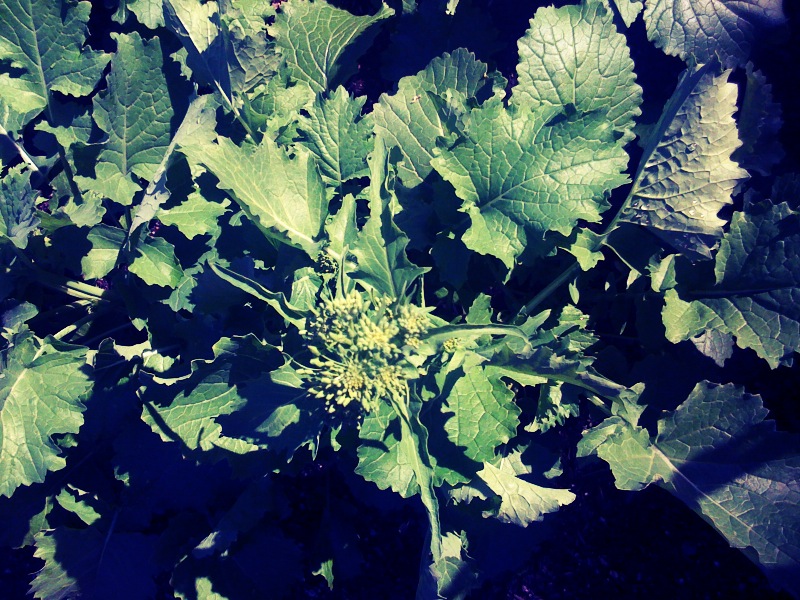
From one day to the next broccoli has flowered  broccolini to be exact.

Neat little rows of spinach baring different sizes of tender, nutty flavored succulent leafs.

jewel colored nasturtiums bring butterflies, hummingbirds and bee's to the bed they share with onions, carrots, and butter lettuce.

Veiled with bird netting red and gold beets, emerald kale bordered by garlic with  peas towering out towards the southern sky, draping heavy with their load of pods and flowers  scatter spent blossoms in the wind.

And the lettuce keeps on giving to the chamomile, onion, and  curly endive.

The peas stand alone..but not for long.

Wednesday, December 15, 2010

Winter Green

When I was a child, time seemed to pass so slowly.   This fall days have melted in to weeks. The garden has served as a timepiece as to where I have been and what I have done.
the beds with Sanford and Son's skateboard ramp in the background


The planning and planting of eight of the ten new garden beds took some time.   I planned as I planted, with a bit of help from John Jeavons book, "How to Grow More Vegetables"- I companion planted my garlic and onions with lettuce and nasturtium; beets and peas, broccoli and cauliflower- and the list goes on.  Since I used seeds, I wasn't certain what the outcome would be.

Every short visit  was a display of some little green bits emerging from the soil.. combined with some strange animal footprints trampling and crushing some of the starts.    

First the lettuce:  Arugula, mesclun, endive, romaine and butter leaf each silky new leaf, sweet and unlike any I've ever consumed before.
Lettuce and Onion


Thinning carrot, beet and other seedlings to add to salads as micro-greens.   Some of them tasted like dirt and were spat out immediately!

 A green only found in nature appears, silvery pea shoots covered in dew.
English Peas

Pretty little carrots all in a row

Carrot, Butter Leaf Lettuce, Nasturtium

Mrs. Havisham still lives in my garden...


Mrs. Havisham lives on
As I begin to rip out dead tomato plants I am halted by beautiful little striped heirloom tomatoes...

Heirloom Tomato
and the last of the summer squash

Butternut Squash

My garden volunteers...somehow not consumed by rabbits?

Patty Pan Squash and Tomato


 Happiness....to be continued.....

Cheers!  Happy Holidays from Ivarene Farms.

Wednesday, September 8, 2010

Seed For Thought


Being an avid gardener I often think of biodiversity and how plants which grow in cold climates have adapted to grow here in Southern California.  When I am planting I try my best to plant a variety of different crops,companion planting where it is beneficial.  


Recently I began to hear stories of a place outside of St. Petersburg Russia,The Pavlovsk Research Station.  The imminent destruction of an institution established in 1926 in order to safeguard crop security is being reported.  It is one of only two botanical repositories on the planet.   Here exists a collection of plants and seeds  which includes more than 5000 samples of European fruit including cherries, apples, plums and it is said over 1000 varieties of strawberries.  


According to the Global Crop Diversity Trust,who has been leading an effort to save the site, the fields are living repositories where about 90 percent of the varieties growing there do not exist anywhere else in the world.  
Scientists have spent their lifetimes protecting and nurturing these plants and seeds, most of which would not survive transplanting due to the specfics of the soil and climate.  During World War II twelve heroic scientists starved to death rather than consume the seeds safe housed in the facility.  


The repository is in it's final days because the Russian government has allowed property developers to buy off chunks of the land to build high rises.  Unless Russian President Medvedev decides to save the land.  Stay tuned for developments... 

This brings to mind a more local story about The South Central Farm  that used to exist on on 41st and Alameda.  Considered one of the largest urban farms in the country, and about the size of a football field, it was an oasis plopped down in the midst of industrial downtown Los Angeles.  


Families depended upon the land for a generation, farming food, herbal medicine and plants for spiritual use.  Some of the plants have been identified by anthropologists as an important tie to where the plants were originally domesticated in the U.S after being brought from Mexico.


I was only able to visit the site once, under very sad circumstances.  In a complicated dispute with a landowner the land was leased for locals to farm in 1985.  And in  a more complicated dispute in 2006, the locals were evicted   They did not go silently. I attended a peaceful vigil while Daryl Hannah and Julia Butterfly Hill held out in a tree.   


Violet was chosen by one of the elders of the farm to help lead a walking vigil.  We silently walked the perimeter of the farm, returning for singing and dancing performed by some of the community members.  


Although the land was bulldozed the farm continues today.  What can you do?
You can purchase vegetables and fruit from them at the Hollywood Farmer's Market on Sundays on Ivar.  
Buy locally, and if you grow vegetables try to save and  share seeds.